 · EST. 1998
Istanbul to Latin America: Shipping Costs & Customs
The same $2,800 order can land at around $4,700 in Santiago and $5,800 in Mexico City. On this lane the freight is the easy part — the duty rates, registrations and labelling rules are what decide your margin.
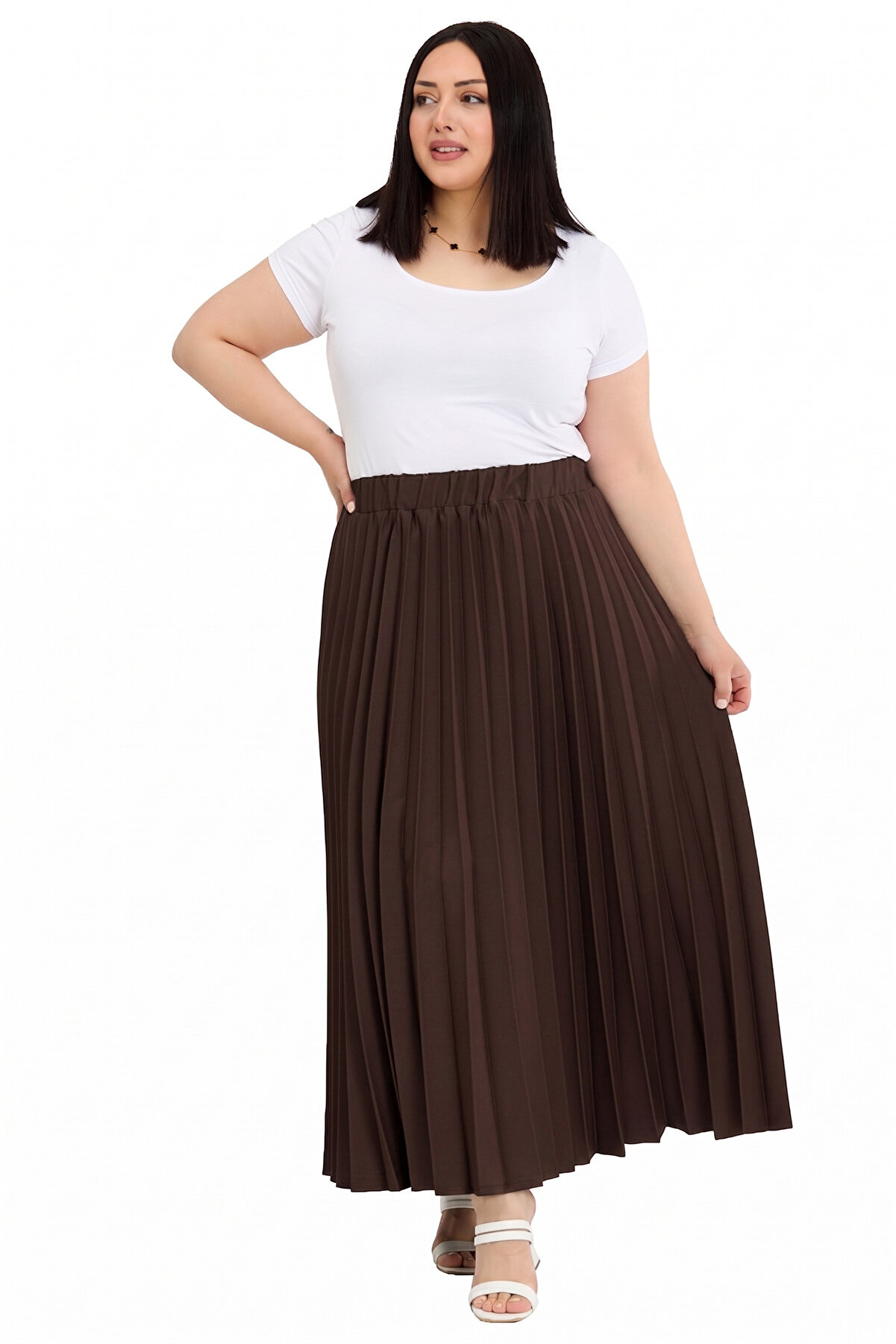
Latin America is the most rewarding and the most technical of the plus-size wholesale lanes. Demand is strong, the fit profile suits Turkish plus grading well, and the competition is thinner than in Europe — but four countries mean four tariff regimes, four importer registrations and, in at least one case, a labelling standard that will stop your goods at the border if you ignore it. This guide covers what it costs, how long it takes, and what has to be in place before you pay. Disentis Modest has produced in our own Istanbul workshop since 1998 across 600+ models in sizes 34–60, and Mexico, Chile, Colombia and Peru are among our regular destinations.
Air or Sea: What This Lane Actually Costs
Istanbul to Latin America is a long haul, so freight per kilo runs meaningfully higher than to Africa or Europe. Rates move with fuel and capacity — treat these as planning ranges and confirm in writing before paying.
- Air express, under 100 kg: roughly $9–15 per kg door to door, 4–8 working days in transit. Volumetric weight applies: apparel cartons are commonly charged at 1.2–1.3× actual weight.
- Air cargo, 100 kg and up: roughly $5–9 per kg airport to airport, 6–12 days, plus terminal handling and broker fees at destination.
- Sea LCL: quoted per cubic metre with a fixed block of destination charges. Transit runs 28–45 days port to port, often with a transshipment, plus 7–20 days for clearance and inland movement.
- Where the ships go: Ambarlı or Haydarpaşa to Manzanillo or Veracruz for Mexico, San Antonio or Valparaíso for Chile, Cartagena or Buenaventura for Colombia, and Callao for Peru.
- The 400 kg rule holds here too. Below roughly 400 kg, fixed port and clearance charges eat the per-kilo saving, and you have waited two months for nothing.
- Insurance: 0.5–1% of goods value. On a longer lane with transshipment, this is not the place to economise.
Practical tip: on this lane, air express is not the expensive option — it is the option that lets you reorder in six weeks instead of four months. For a boutique still learning which models sell, that cycle speed is worth more than the freight saving.
Country by Country: Duty, Tax and Registration
This is where the four markets diverge sharply. Rates and registration rules change, so use these as a planning frame and confirm your exact HS code with a licensed customs broker before you order.
Mexico
- Duty on apparel is high and has been adjusted upward in recent years — commonly quoted in the 25–35% range for countries without a trade agreement, and Turkey does not have one with Mexico. Verify the current rate for your specific code.
- IVA at 16% is applied on top of customs value plus duty and fees.
- A customs processing fee (DTA) of roughly 0.8% of customs value applies to most formal entries.
- You must be registered in the Padrón de Importadores and clear through a licensed agente aduanal. This is not optional for commercial imports, and registration takes time — start it before you place an order, not after the goods sail.
- Broker and pedimento costs: budget roughly $200–400 per shipment.
Chile
- Chile and Turkey have a free trade agreement. With a valid certificate of origin, Turkish-made apparel can qualify for preferential — often zero — duty instead of the general 6% ad valorem rate. Confirm the current schedule and origin rules with your broker.
- IVA at 19% applies regardless of the duty outcome.
- The origin certificate is the whole benefit. Without correct origin documentation issued at shipment, you pay the general rate — and it cannot be fixed retroactively without a claim process.
- You need a RUT and, for commercial volumes, a customs agent. Chile is generally the most straightforward clearance in the region.
Colombia
- Apparel is one of Colombia's most protected categories. Tariffs on clothing have historically combined an ad valorem percentage with a specific charge per kilo, which makes the effective rate depend on both value and weight. Lightweight, higher-value garments generally fare better under this structure than heavy, cheap ones.
- IVA at 19% applies on top.
- You need a NIT and RUT with import activity registered, and a customs agency for formal entries.
- Get a written duty calculation before you order, not after arrival. On this lane a broker's five-minute estimate can change which categories are worth importing at all.
Peru
- Duty is generally the lowest of the four, with many lines at 0% and apparel commonly falling in the 0–11% band depending on classification.
- IGV at 18% applies on customs value plus duty.
- You need a RUC, and shipments above the courier threshold require a formal entry through an agency.
- Callao handles the volume, and clearance is generally faster than Colombia and slower than Chile.
The Paperwork and Labelling That Actually Stops Shipments
Freight rarely fails. Documents and labels do. These are the items that most often hold goods at a Latin American border.
- Certificate of origin. Essential for Chile if you want the preferential rate, and useful everywhere as proof of Turkish manufacture. It must be issued at shipment — not reconstructed later.
- Mexico's textile labelling standard (NOM-004-SCFI) requires garments to carry a label in Spanish with fibre composition, size, care instructions, country of origin and the importer's details. Goods arriving without compliant labels can be held for relabelling, which costs both time and money.
- Chile, Colombia and Peru also have textile labelling requirements covering composition and care in Spanish. Confirm the current specifics with your broker before the labels are produced, not after.
- Commercial invoice and packing list must match each other exactly — same descriptions, quantities and values. A discrepancy of a few pieces triggers a query, and a query costs days.
- Descriptions must be specific. "Ladies' garments" invites reclassification at the inspector's discretion. "Women's woven viscose dress, long sleeve" does not.
- Put the labelling requirement in your order. Tell your supplier which market the goods are going to before production, so the correct labels go in at source.
Practical tip: send your commercial invoice and packing list to your customs agent for review on the day you receive the proforma, before you pay. Ten minutes of review before shipping is cheaper than every alternative after arrival.
A Worked Landed Cost — and the IVA Detail That Changes It
Take an order of $2,800 ex-works Istanbul, 80 kg gross, shipped air express at $12/kg = $960, plus $28 insurance. Customs value is therefore about $3,788.
- Mexico, at 25% duty: duty $947, DTA about $30, IVA at 16% on $4,765 = $762, broker and delivery about $300. Total roughly $5,827, a multiplier of around 2.1×.
- Chile, with a valid certificate of origin: duty potentially $0, IVA at 19% on $3,788 = $720, agent and delivery about $200. Total roughly $4,708, a multiplier of around 1.7×.
- The IVA detail: in most of these markets, IVA/IGV paid at import is creditable against the VAT you charge on sales if you are properly registered. Duty is not. That means your true cost of goods is often the figure excluding recoverable VAT — in the Mexican example, roughly $5,065 rather than $5,827, or about 1.8× instead of 2.1×.
- Check with your accountant before pricing. Treating recoverable IVA as a cost makes you uncompetitive; treating non-recoverable duty as recoverable makes you unprofitable.
- Whichever way it falls, calculate your multiplier once and apply it to every quote you receive. On this lane it will sit somewhere between 1.6× and 2.2× depending on country and structure.
A Realistic Timeline
For an in-stock air express order, plan 15–22 days from decision to shop floor. Sea adds six to ten weeks.
- Day 0: build your list on the collection page — different models and colours can be combined, in full size sets or single pieces — and send it on WhatsApp to +90 555 336 47 86.
- Day 0–1: we confirm stock and issue the proforma; you confirm labelling requirements and check your importer registration is active.
- Day 1–2: pay as agreed with us on WhatsApp — by bank transfer (proforma number in the reference field), cash or via your cargo company.
- Day 2–6: picking, quality check, labelling, bagging and carton packing; final weights and dimensions confirmed.
- Day 6–7: the freight figure is confirmed and settled as agreed; goods hand over to the courier.
- Day 7–14: transit Istanbul to destination.
- Day 14–20: clearance and inland delivery. Three to five days is normal with clean paperwork and an active registration; two weeks or more if a query is raised.
Five Mistakes That Cost Latin American Boutiques Money
- Starting the importer registration after ordering. In Mexico especially, goods arriving before your Padrón registration is active is an expensive way to learn this lesson.
- Skipping the certificate of origin into Chile. It is the single highest-value document on this lane, and it cannot be added after the fact without a claim.
- Ignoring labelling until arrival. Relabelling at destination costs more than labelling at source, and it delays your selling window.
- Choosing sea for a small order. Below about 400 kg, fixed destination charges wipe out the saving and you have lost two months of selling.
- Pricing off the invoice value. On this lane, landed cost runs 1.6–2.2× your wholesale price. Retail set from the wholesale figure will not survive markdowns.
Everything is cut and sewn in our own Istanbul workshop and ships worldwide against a proforma invoice; payment is by bank transfer, cash or via your cargo company, agreed with you for each order on WhatsApp. The Latin American lane rewards preparation more than any other: registration active, origin certificate requested, labelling specified before production, and a broker's duty calculation in hand before any payment leaves your account. Do those four things and the rest is just freight.
Frequently asked questions
How much does it cost to ship clothes from Turkey to Latin America?
Air express runs roughly $9–15 per kilo door to door under 100 kg, and air cargo about $5–9 per kilo above 100 kg. Sea LCL is quoted per cubic metre with fixed destination charges and rarely makes sense below about 400 kg. Apparel is usually charged on volumetric weight, typically 1.2–1.3× actual weight.
How long does shipping from Istanbul to Mexico or Chile take?
Air express is typically 4–8 working days in transit plus 3–5 days clearance, so around 15–22 days from order to delivery including production and payment. Air cargo runs 6–12 days plus clearance. Sea freight takes 28–45 days port to port, often with a transshipment, plus 7–20 days for clearance and inland movement.
What duty does clothing pay when imported into Mexico?
Apparel duty in Mexico is high and has been adjusted upward in recent years, commonly quoted in the 25–35% range for countries without a trade agreement, and Turkey does not have one with Mexico. On top come IVA at 16% and a customs processing fee of roughly 0.8%. Confirm your exact rate with a licensed agente aduanal before ordering.
Is there a trade agreement between Turkey and Chile?
Yes, Chile and Turkey have a free trade agreement, and with a valid certificate of origin Turkish-made apparel can qualify for preferential — often zero — duty instead of the general rate. IVA at 19% still applies. The certificate must be issued at shipment, so request it when you place the order rather than after arrival.
Do I need to be registered as an importer?
Yes, in all four markets. Mexico requires registration in the Padrón de Importadores and clearance through a licensed agente aduanal; Chile requires a RUT; Colombia requires a NIT and RUT with import activity registered; Peru requires a RUC. Start the registration before you place an order, since activating it can take longer than the shipment itself.
What labelling do garments need for Latin American markets?
Mexico's NOM-004-SCFI requires a Spanish-language label showing fibre composition, size, care instructions, country of origin and importer details. Chile, Colombia and Peru have their own textile labelling requirements covering composition and care in Spanish. Tell your supplier the destination market before production so compliant labels go in at source rather than being redone at the border.
What is the landed cost per piece from Turkey to Latin America?
Landed cost per piece is your wholesale price times your landed multiplier. On a typical $2,800 air express order, landed cost works out around $5,827 in Mexico at a 25% duty and around $4,708 in Chile under the free trade agreement — multipliers of roughly 2.1× and 1.7×. Note that IVA or IGV paid at import is generally creditable for registered businesses, so your true cost of goods is often lower than the raw landed figure.
What is the minimum order and how do I place it?
The minimum order is $400 in total — roughly 20–30 pieces, and different models and colours can be combined, from dresses and tops to outerwear. Build your list on the collection page in full size sets or single pieces, then send it via WhatsApp to +90 555 336 47 86. You receive a proforma invoice; payment is by bank transfer, cash or via your cargo company — agreed with you for each order on WhatsApp. The site itself takes no payment.